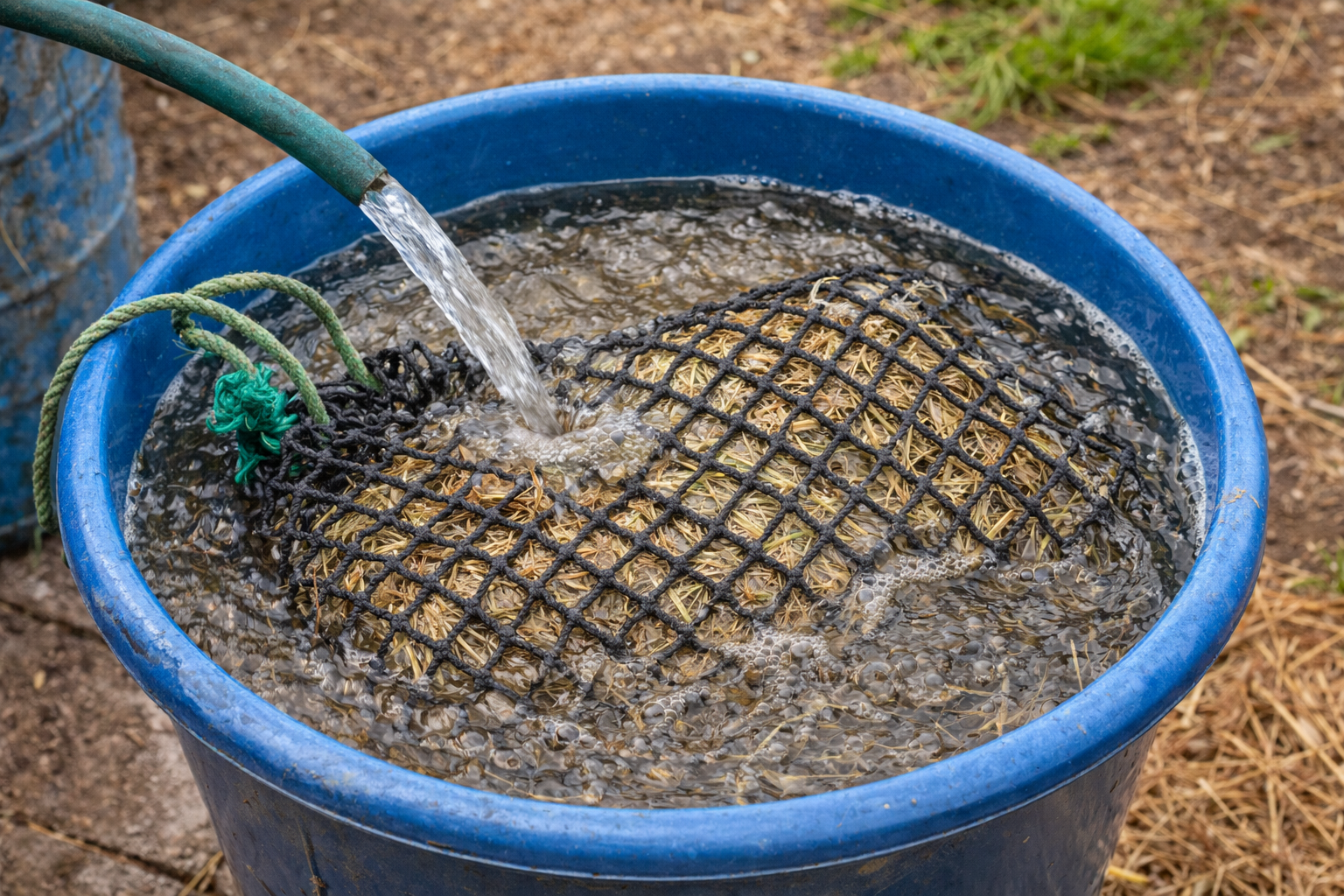
Why Hay Selection Matters for Metabolic Horses: Is Soaking the Answer?
For horses living with insulin dysregulation, equine metabolic syndrome (EMS), or a history of insulin-associated laminitis, dietary sugar – particularly from forage – is one of the most important factors we can control.
Most horse owners are aware that 'lush' pasture and grain-based feeds can trigger spikes in blood glucose and insulin. Hay, however, is often more challenging. Knowing whether a hay is truly safe to feed is not always straightforward and as a result, many owners turn to hay soaking – often for long periods – “just to be sure”.
To understand when soaking is useful (and when it isn’t), it’s important to first clarify which carbohydrates actually matter for metabolic horses.
Understanding NSC – and Why the Details Matter
Non-structural carbohydrates (NSC) refers to the carbohydrates in forage that do not form part of the plant’s fibrous structure. NSC includes:
Simple sugars (ethanol-soluble carbohydrates, ESC)
Starch
Fructans
While these are often grouped together on forage analyses, they do not behave the same way in the horse.
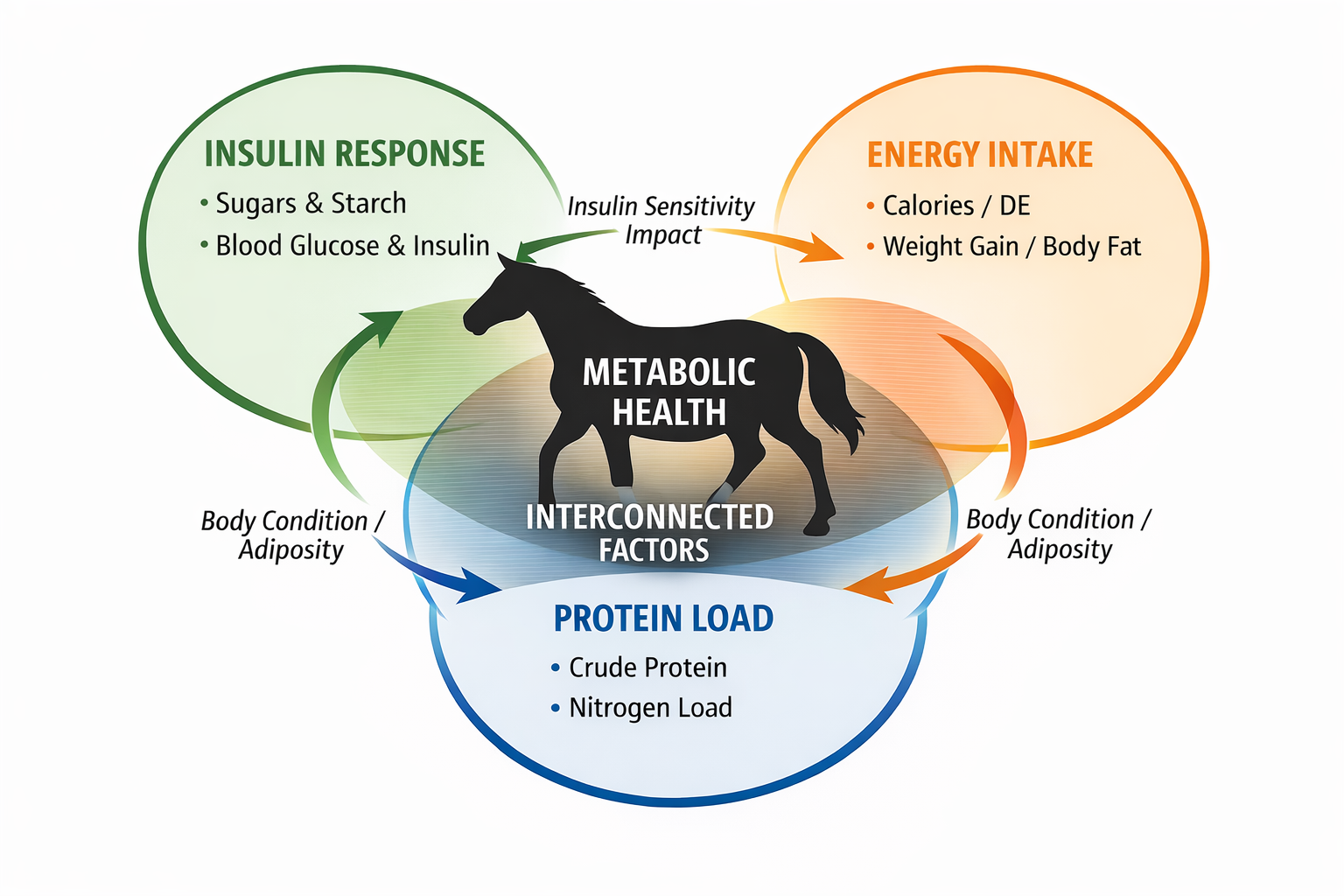
Simple sugars and starch are digested and absorbed in the small intestine and are responsible for rapid post-feeding rises in blood glucose and insulin - responses we aim to minimise in metabolically vulnerable horses.
Fructans, on the other hand, behave more like fermentable fibre in the horse - they bypass the small intestine and are fermented in the hindgut. They do not behave like sugar in terms of insulin response.
Very large fructan intakes can still be relevant to laminitis risk via hindgut fermentation overload and systemic inflammatory responses, but this is a different mechanism and should not be confused with insulin-driven disease.
What This Means for Hay Selection
When hay selection is guided by total NSC or fructan values rather than insulin-relevant carbohydrates:
Metabolically appropriate hays may be unnecessarily excluded
Hay soaking is often used routinely “just in case”
Valuable nutrients can be lost without addressing insulin dysregulation
For horses at risk of insulin-associated laminitis – or those recovering from it – ESC + starch is the key metric to assess.
Current evidence supports aiming for:
ESC + starch below ~10%-12% of dry matter
Ideally, hay would be purchased with an accompanying analysis. In reality, this is still uncommon in Australia, and testing individual batches and buying in bulk is not feasible for many owners. This is often where hay soaking enters the conversation.
When Does Soaking Hay Make Sense?
Hay soaking can be a useful targeted tool, but it should not be used by default.
Soaking may be appropriate when:
Hay analysis shows ESC + starch above the recommended range
No suitable low-ESC/starch hay is available
Soaking is used short-term or strategically, with the rest of the diet adjusted accordingly
In emergency situations, such as when a horse has just been diagnosed with insulin dysregulation or acute laminitis, and immediate dietary risk reduction is required while forage testing, sourcing, or veterinary management is underway
Soaking is not required when:
Hay already tests suitably low in ESC + starch
Soaking is used without understanding the nutritional trade-offs
To better understand these trade-offs, it helps to look at what the research shows.
What the Research Says About Hay Soaking
A 2021 peer-reviewed study published in the Journal of Equine Veterinary Science examined how soaking hay for different durations altered its nutrient composition.
The study found that:
Hay soaking reduced water-soluble carbohydrates (WSC) - sugars
A 15-minute soak resulted in measurable reductions
Longer soaking times did not produce proportionally greater carbohydrate reductions
However, soaking also resulted in the loss of other nutrients, including:
Metabolisable energy
Crude protein
Digestible amino acids
Minerals
This means that while soaking can reduce simple sugars, it also changes the overall nutritional profile of the hay, which must be considered when balancing the diet.
Prolonged soaking offers little additional benefit and increases the risk of unnecessary nutrient loss.
Soaking Hay for Metabolic Horses – Practical Considerations
Soaking hay can be helpful when used correctly, but it is not a perfect solution.
Benefits
Reduces WSC including simple sugars, lowering intake of insulin-raising carbohydrates
May assist horses that are particularly sensitive to post-feeding insulin responses
Trade-offs
Does not reduce starch
Can significantly reduce protein, minerals, and energy
May contribute to weight loss or nutritional deficiencies if not compensated elsewhere in the diet
Best Practice for Metabolically Sensitive Horses
For horses with metabolic risk, the most effective approach is:
Test the hay
Guessing is not enough. Focus on ESC and starch, not just total NSC.
Choose appropriate forage first
A naturally low-ESC/starch hay is preferable to relying on soaking.
Use soaking strategically, not routinely
If soaking is required, account for losses in energy, protein and minerals.
Balance the whole diet
Reduced nutrient intake from soaked hay often needs to be compensated elsewhere.
Monitor the horse
Body condition, clinical signs, veterinary and equine nutritionist input remain essential.
The Takeaway
For horses with insulin dysregulation, EMS or insulin-associated laminitis, simple sugars and starch are the carbohydrates that matter most. Fructans do not raise insulin, and focusing on them can distract from effective dietary management.
Hay soaking for short durations (around 15 minutes) can be helpful when used intentionally, but it should never replace good forage selection, appropriate testing and a balanced, horse-specific nutrition plan.
Reference:
Bochnia, M., Pietsch, C., Wensch-Dorendorf, M., Greef, M., & Zeyner, A. (2021). Effect of Hay Soaking Duration on Metabolizable Energy, Total and Prececal Digestible Crude Protein and Amino Acids, Non-Starch Carbohydrates, Macronutrients and Trace Elements. Journal of Equine Veterinary Science, 101, 103452. https://doi.org/https://doi.org/10.1016/j.jevs.2021.103452
Use this link to access the research paper: