Rugging Horses in Hot Weather
Australia is currently experiencing extreme heat, and with it comes a familiar question for horse owners:
“Should I rug my horse to protect them from the sun, flies, or coat fading?”
It’s an understandable concern but one that deserves a science-based answer, not tradition, habit, or marketing claims.
How horses actually cope with heat
Horses are biologically designed to manage heat through a combination of:
Sweating
Evaporation and airflow across the skin
Behavioural strategies, such as seeking shade, changing posture, and reducing movement
Once ambient temperatures rise above approximately 25°C, horses are already working harder to maintain a safe internal body temperature.
Anything that interferes with evaporative cooling increases heat load and the risk of heat stress.
What the research shows about rugs in hot weather
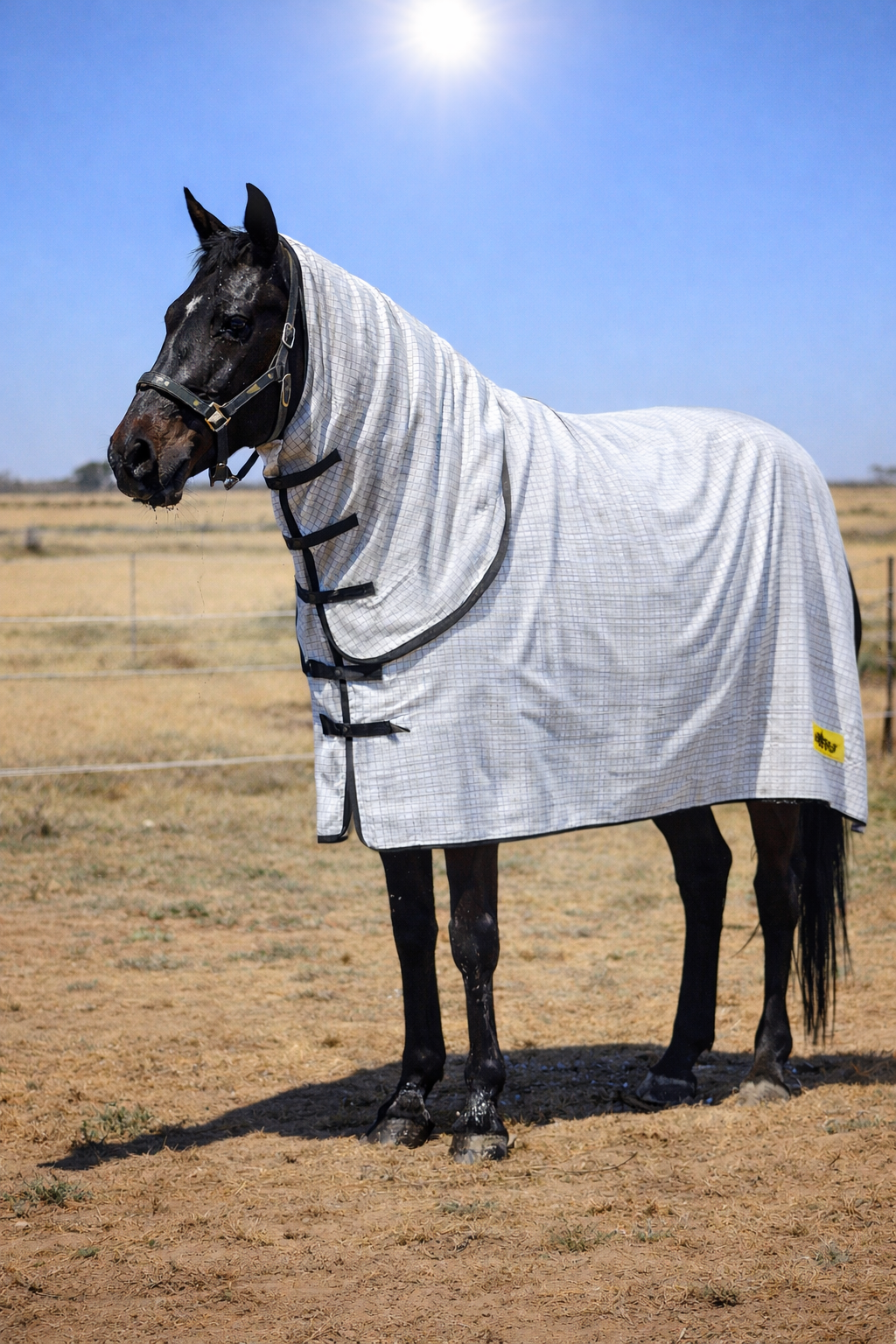
Australian research examining horses exposed to direct sunlight in temperatures exceeding 25°C found that:
Horses wearing light-coloured cotton rugs had:
Higher internal (rectal) temperatures
Significantly increased sweating
Unrugged horses remained cooler internally
Rugged horses showed less tail swishing and pawing, likely due to reduced fly irritation
The key takeaway
While rugs may reduce fly annoyance, they increased heat stress.
Importantly, rugs were not an effective substitute for shade.
“But flies are annoying! Isn’t that worse than heat?”
This is an important and valid question.
Flies can be:
Annoying
Stressful
Medically significant in some horses (e.g. insect bite hypersensitivity)
However, heat stress is systemic and potentially life-threatening.
In simple terms:
Flies cause localised irritation
Heat stress affects every organ system
In hot conditions, a horse that cannot effectively cool itself is at far greater welfare risk than a horse that is occasionally bothered by flies.
Where fly protection is genuinely needed, safer strategies include:
Adequate shade
Airflow
Strategic fly management (traps, repellents, quality fly masks)
These approaches protect the horse without compromising thermoregulation.
Shade matters more than rugs
Australian paddock-based studies show that:
Horses actively seek shade, even when conditions don’t appear extreme to humans
Natural tree shade is preferred over artificial shelter
Shade-seeking is a normal and essential part of thermoregulation, not avoidance behaviour
Even if horses spend much of the day in open paddocks, having the option to choose shade is critical for welfare.
What about coat fading?
This is another very common concern and one that’s often misunderstood.
Yes, ultraviolet exposure can contribute to coat bleaching, but in practice, sunlight alone is rarely the primary cause.
Significant coat fading is more commonly associated with:
Heavy sweating, with salt drying on the coat
Copper (Cu) and zinc (Zn) deficiency or imbalance
Poor overall mineral balance affecting pigment production
Copper and zinc are essential for:
Melanin synthesis
Coat strength and colour stability
Skin and immune health
A horse that sweats heavily in hot weather and is marginal or deficient in copper and zinc will often fade dramatically - rug or no rug!
In these cases, the solution is nutritional correction, not thermal compromise.
When NOT to rug
Rugs should be avoided when:
Temperatures exceed 25–28°C
Humidity is high
Airflow is limited
Shade is poor or unavailable
The horse is already sweating
In these conditions, rugs:
Trap heat
Reduce evaporative cooling
Increase sweat loss and electrolyte demand
When rugging may be appropriate
In limited, carefully managed situations, such as:
Severe insect bite hypersensitivity
Mild temperatures
Low humidity
Close monitoring of the individual horse
Even then, rugs should be:
Very lightweight
Highly breathable
Removed during peak heat
My take-home message:
Shade beats rugs in hot weather
Flies are uncomfortable - heat stress is dangerous
Coat fading is often nutritional, not solar
Good management supports thermoregulation, not overrides it
In extreme Australian conditions, horse comfort is not about covering horses, it’s about allowing them to cool themselves properly.
And on hot days, hosing horses down can be extremely effective!
Let the water run, allow evaporation to do its job, and don’t scrape unless humidity is very high.
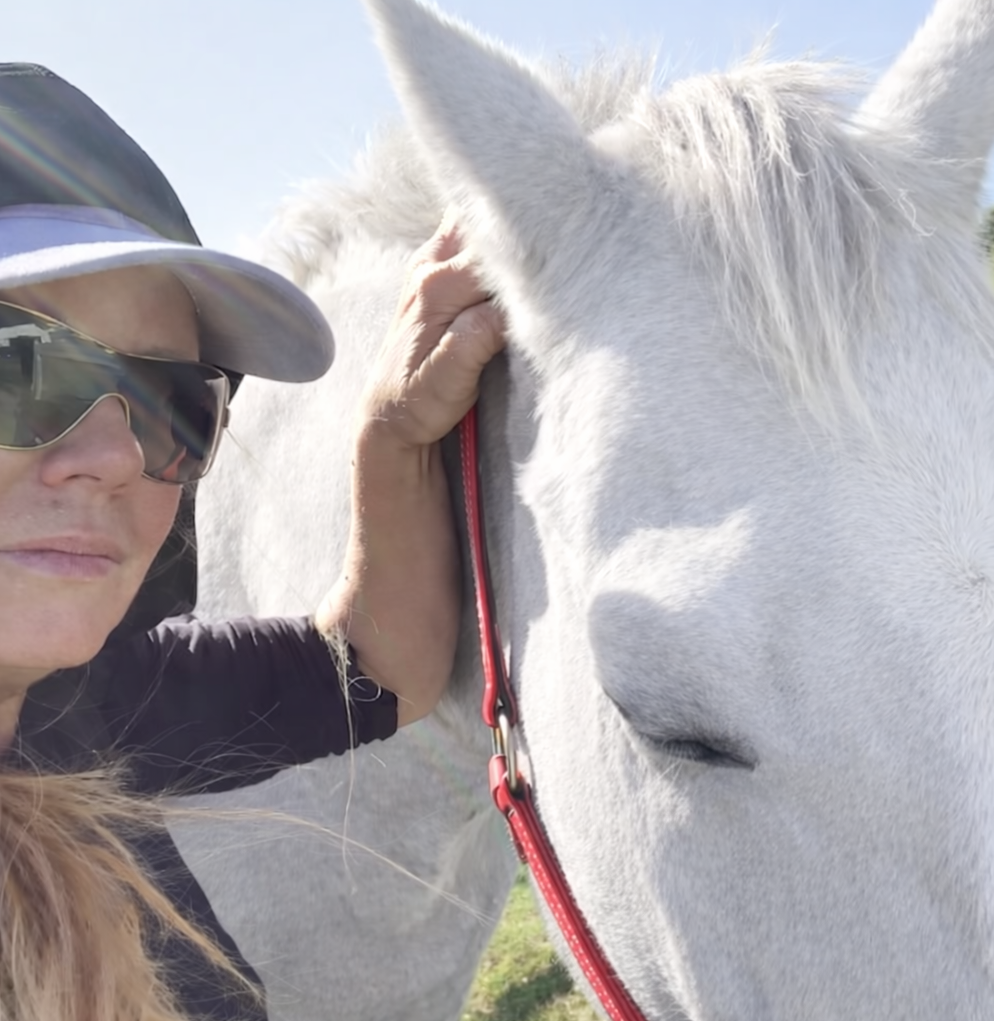
My horse loves having a shower!
Reference: Padalino, B., Loy, J., Hawson, L., & Randle, H. (2019). Effects of a light-colored cotton rug use on horse thermoregulation and behavior indicators of stress. Journal of Veterinary Behavior, 29, 134-139.