Mycotoxins in Pasture Grasses – What Your Horse May Be Dealing With Right Now
This is one of my 'favorite' topics and was an area of research at university that I feel even now, I've only scratched the surface of! It has been a challenge to condense all that I want to say about mycotoxins because they can have such a significant impact on horses and yet strategies to mitigate their effects have barely been studied in equines!
(those in the back - shhhh!🤫)
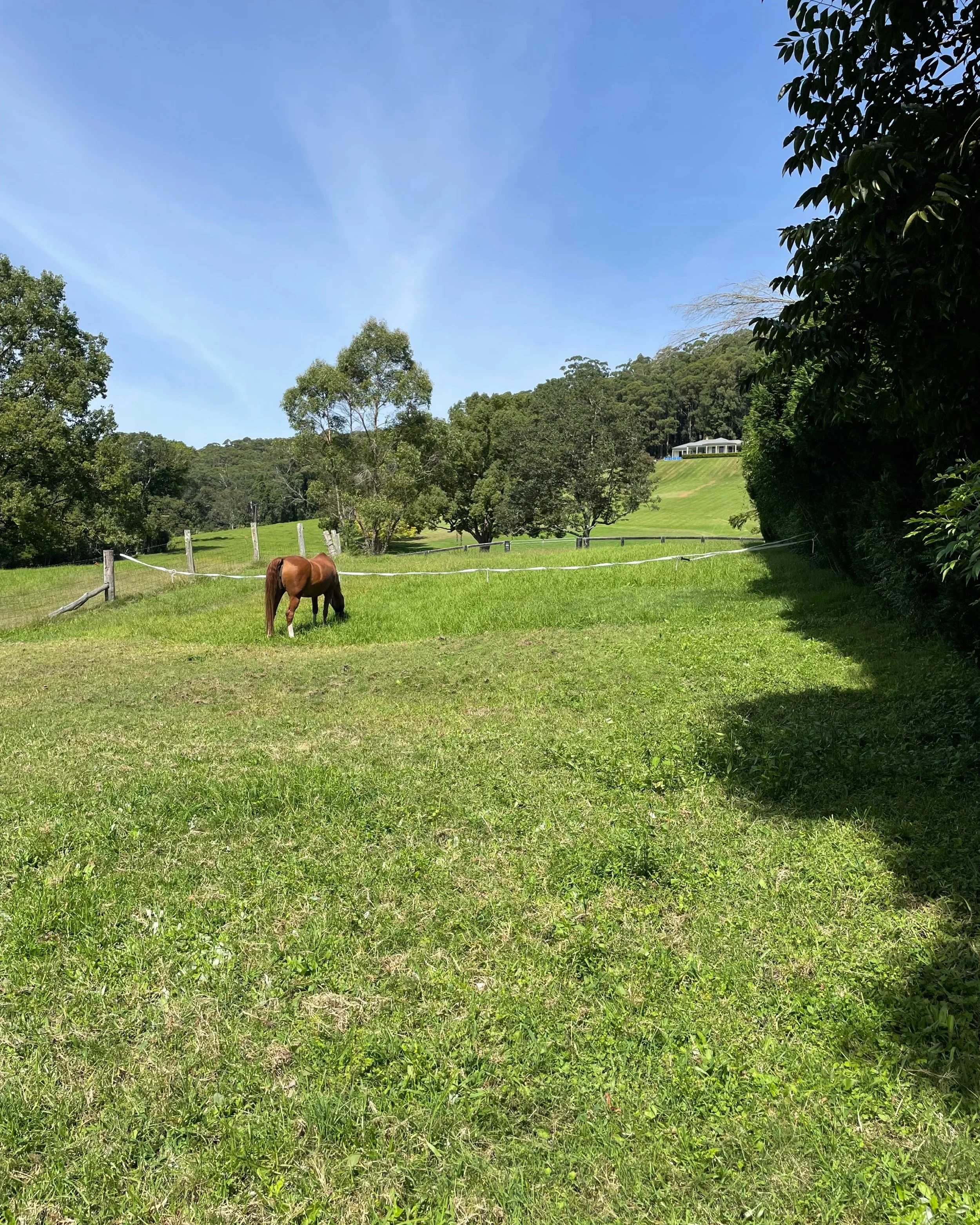
At this time of year, many horses on pasture are dealing with more than just heat, flies, or changes in grass growth.
If your horse feels a bit off – reluctant to work, footy, tense, suddenly spooky, reactive, girthy, sensitive to touch, or just “not quite right” – pasture mycotoxins deserve to be on your radar.
What are mycotoxins?
Mycotoxins are toxic compounds produced by fungi that live on or within plants. These fungi are invisible to the naked eye and thrive under warm, humid conditions – exactly what much of coastal NSW is experiencing since late summer and now in autumn while it's still hot and humid.
Mycotoxins are commonly discussed in relation to mould contamination in cereal crops and stored grains, which is a well recognised issue in livestock production.
However grazing horses can also be exposed to mycotoxins produced by fungi infecting pasture grasses, which is the focus of this article.
Some fungi live inside the grass itself (endophytes), while others infect seed heads, particularly when grasses are stressed or allowed to run to seed.
High-risk pasture grasses in coastal NSW
Right now, the biggest risk grasses I see clinically along the NSW coast include:
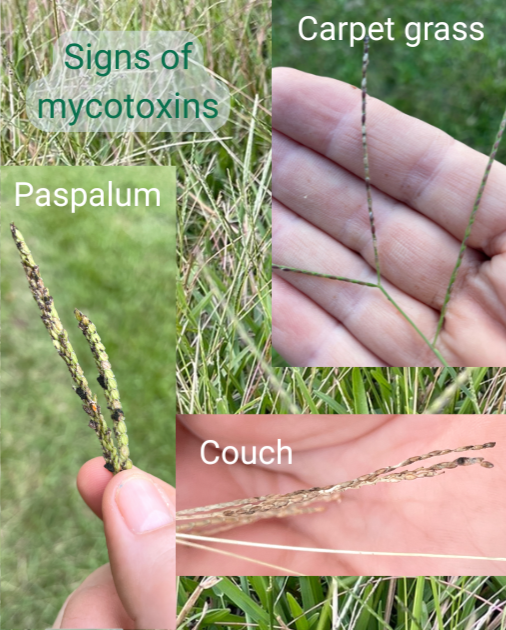
Paspalum (Paspalum dilatatum / Dallas grass)
Carpet grass (Axonopus spp.)
Couch grass (Cynodon dactylon / Bermuda in US)
Kikuyu (Pennisetum clandestinum)
These warm-season grasses tend to dominate coastal pastures, particularly in humid areas or paddocks that remain damp after rain.
When these grasses are flowering or producing seed heads, horses may ingest higher concentrations of mycotoxins, particularly from infected seed heads.
In southern or cooler regions
In cooler climates such as Victoria and other temperate areas of southern Australia, the dominant pasture grasses tend to be different.
The most common grasses associated with pasture mycotoxins in these regions include:
Perennial ryegrass (Lolium perenne)
Tall fescue (Festuca arundinacea)
These cool-season grasses can harbour fungal endophytes that produce mycotoxins such as tremorgens and ergot alkaloids.
Unlike many warm-season grasses, toxin concentrations in these species can also be higher in the lower portions of the plant, particularly the leaf sheath and crown near the base of the plant. This means horses forced to graze very short pasture may be exposed to greater toxin concentrations.
What do these mycotoxins do to horses?
Two major mycotoxin groups matter most for grazing horses:
1. Tremorgenic mycotoxins (affects the nervous system)
Found in grasses like paspalum, carpet grass and perennial ryegrass, these toxins interfere with nerve signalling.
Possible signs include:
Muscle tension or tremors
Ataxia or loss of coordination
Heightened reactivity or anxiety
Spookiness, agitation, aggression
Sensory overload (touch, sound, movement)
This is often loosely referred to as paspalum or ryegrass staggers – though horses can show subtle signs long before dramatic staggers appear.
2. Ergot alkaloids (affects blood vessels & hormones)
Produced by fungi infecting grasses such as paspalum, couch, perennial ryegrass and tall fescue, these compounds cause vasoconstriction (narrowing of blood vessels) and prolactin suppression (affects pregnant mares).
This can contribute to:
Heat intolerance and poor thermoregulation
Cool limbs or feet due to reduced blood flow
Reduced appetite and weight loss
Reproductive issues particularly in broodmares
Reduced milk production (agalactia)
In ridden and performance horses, reduced blood flow alone may explain vague signs like poor recovery, stiffness, foot soreness or reluctance to work.
Why signs can look so random
Not all horses grazing the same pasture are affected equally.
Mycotoxin impact depends on:
How much contaminated grass is eaten
Which parts of the plant are consumed
Individual sensitivity
Heat, dehydration, nutritional status
Whether multiple mycotoxins are present together
This is why one horse may appear unaffected while another shows clear signs.
What to look for in the paddock
You often can’t see mycotoxins themselves – but there are clues that fungal activity may be occurring.
Things that increase risk include:
• Heavy seed head production, particularly in paspalum, couch, ryegrass and tall fescue
• Sticky honeydew residue on seed heads. This sugary secretion is produced during the early infection stage of ergot fungi and may leave horses with sticky muzzles or legs after grazing
• Dark or black fungal bodies replacing seeds (ergots)
• Overgrazed pasture where horses are forced to consume the lower portions of the plant in cool season grasses such as perennial ryegrass and tall fescue
• Pastures with dense growth and a build-up of decaying plant material such as with kikuyu and carpet grass, which creates a humid microclimate ideal for fungal growth
In endophyte-infected perennial ryegrass and tall fescue, toxin concentrations are often highest in the leaf sheath, crown and seedheads. This means both overgrazing and grazing tall mature pasture can increase exposure.
In warm season grasses such as paspalum, couch and carpet grass, the main risk is typically fungal infection of flowering seed heads. However humid pastures with heavy thatch can also support a wider range of fungal metabolites, particularly in grasses such as kikuyu.
Wet paddocks dominated by species such as paspalum, kikuyu and carpet grass often retain more moisture at the soil surface, which can increase fungal activity compared with drier, more open pastures dominated by couch.
What about mycotoxin binders?
Most research on mycotoxin binders (MTB) comes from livestock production animals such as cattle, pigs and poultry. Results have been extrapolated to horses as there is still limited (2!) studies conducted with horses, even though they are widely marketed and sold in the equine industry!
Binders generally fall into three broad categories:
Activated charcoal
Activated charcoal can bind a wide range of toxins due to its very large surface area.
However, it also binds nutrients and medications indiscriminately, including vitamins, minerals and amino acids.
For that reason it is usually considered a short-term or veterinary-directed option, rather than something used continuously in a horse’s diet. If used it should be fed separately from other feeds that include supplements or medications.
Silicate / clay binders
These include products such as bentonite and HSCAS (hydrated sodium calcium aluminosilicate).
Some clays are highly effective at binding specific toxins, particularly aflatoxins (typically associated with grain products). However their effectiveness against many pasture toxins is variable.
Certain clays may also bind nutrients such as trace minerals, so their long-term use requires careful consideration.
Yeast-derived binders and enzymatic products
Some binders use glucomannan fractions from specific strains of Saccharomyces cerevisiae, while others use microbial enzymes designed to transform certain toxins into less harmful compounds.
These products may provide a broader spectrum of activity against some mycotoxins and are often considered nutritionally preferable to high levels of clay or charcoal.
However, their effectiveness still depends heavily on the many properties of the toxin involved.
Why binder effectiveness varies
Mycotoxins are chemically diverse molecules with very different:
• molecular size
• polarity
• lipophilicity
• stability in the digestive tract
Because of this, no single binder works equally well against all mycotoxins.
For example:
• some toxins bind well to clays
• others are better adsorbed by yeast glucomannans
• some may be biotransformed or deactivated by specific microbial enzymes
• some are poorly bound by most currently available binders
Warm-season and cool-season pastures also tend to involve different fungal species and toxin families, which may partly explain why certain binders appear to work better in some situations than others.
Timing and feeding considerations
Another practical limitation is that horses on pasture graze continuously throughout the day, while binders are usually fed once or twice daily with feed.
This means binders can only interact with toxins that are present in the digestive tract at the same time.
For this reason:
• feeding binders at least twice daily is likely to be more beneficial
• feeding them separately from nutrient-dense meals may reduce unwanted nutrient binding when using clays or charcoal
Binders may also help intercept toxins that re-enter the gut through enterohepatic recirculation ('recyling' through the liver and back to the small intestine). This may partly explain why some horses improve even when binders are only fed twice daily.
The most effective strategy: pasture management
While binders may help reduce exposure, they are not a substitute for pasture management.
If mycotoxins are suspected, the most important steps remain:
• Remove horses from the suspect pasture
• Provide alternative forage such as hay
• Slash or top pastures to reduce seed heads
• Avoid forcing horses to graze stressed or over-mature pasture
• Monitor horses closely for neurological or heat-related signs
• In cool season grasses avoid overgrazing to the base of the plant
Reducing exposure to the source of the toxins will always be more effective than trying to neutralise them after ingestion.
The big takeaway
Mycotoxins are an often-overlooked stressor for grazing horses – especially in warm, humid conditions or when grasses are flowering and seeding.
They can influence:
• the nervous system
• blood flow and thermoregulation
• hormonal balance
• reproduction
• performance and behaviour
• soundness and recovery
If your horse suddenly feels “not quite right”, and the pasture has changed, mycotoxins deserve consideration.
If you need help assessing pasture risk, reviewing the diet or deciding on appropriate support strategies, please feel contact me regardless of your location.