10 Subtle Signs Your Horse May Benefit from Bodywork
Small changes in behaviour, posture or movement can sometimes reveal underlying musculoskeletal tension.
Horse owners are often the first to notice when something in their horse changes.
It might be a feeling that something is slightly different:
your horse feels stiffer than usual
they resist something they previously accepted
they seem uncomfortable when first mounted
or they simply feel “not quite right.”
Sometimes it is obvious: a clear lameness, swelling or injury. In those cases, veterinary assessment is essential.
But more often the changes are subtle: a movement that feels slightly different or a behaviour that appears gradually.
These small shifts can be early signs that the musculoskeletal system is under strain. Horses are remarkably good at compensating, so discomfort may show up in behaviour, posture or performance long before a clear injury becomes visible.
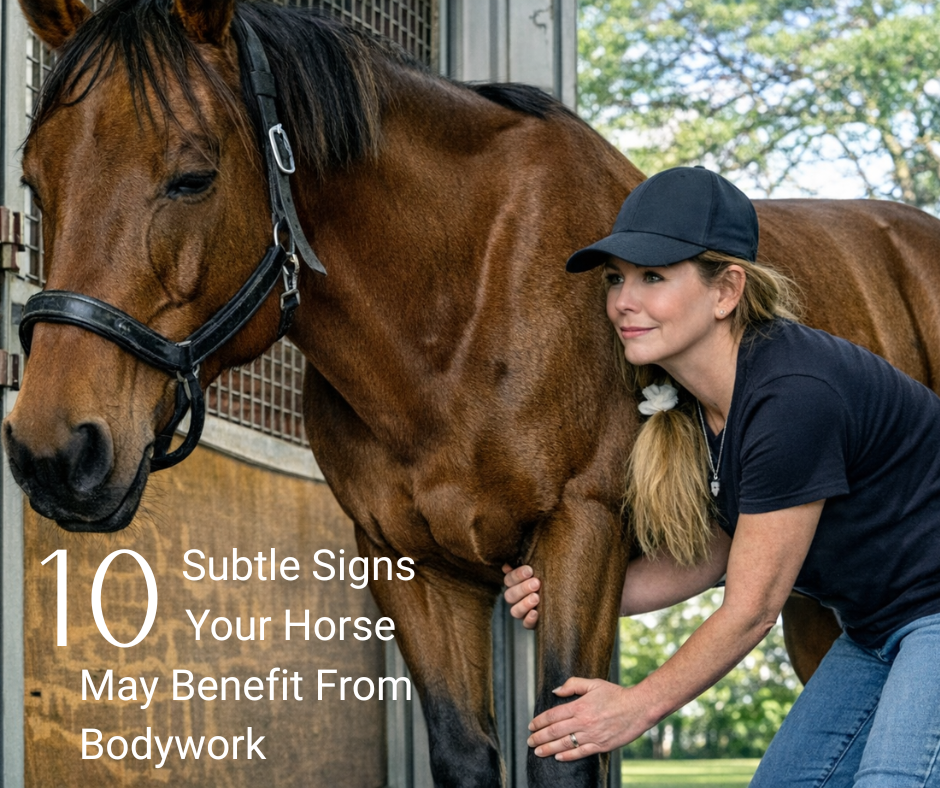
Hands-on bodywork is not a replacement for veterinary care. However, it can help identify areas of muscular tension, fascial restriction and compensatory patterns that may be affecting comfort and movement.
Here are ten common signs that a horse may benefit from a bodywork assessment.
1. Difficulty Maintaining Canter or Repeatedly Disuniting
Many horses can trot comfortably while underlying weakness or restriction remains hidden.
Canter requires greater coordination, stability through the back and engagement from the hindquarters. If the horse lacks strength or has tension through the thoracolumbar region, sacroiliac area or pelvis, maintaining a balanced canter can become difficult.
Owners may notice:
breaking gait or returning to trot
disuniting behind
difficulty striking off on one lead
resistance when asked to canter
These patterns often reflect the body struggling to organise movement efficiently.
2. Reluctance to Pick Up a Hoof
Difficulty lifting a leg for the farrier is frequently labelled as behavioural. In many cases, however, the horse may be anticipating discomfort.
Holding a limb up requires stability through several areas of the body, including:
the thoracic sling
shoulder and scapular region
neck and cervical spine
pelvis and sacroiliac region
If these structures are tight, weak or compensating, lifting a limb may feel physically difficult.
Signs owners may notice include:
snatching the leg away
leaning heavily on the farrier
reluctance with one particular limb
behaviour that has worsened over time
3. Head Tossing or Poll Sensitivity
The poll and upper cervical region are highly mobile and closely connected with the horse’s balance, posture and contact with the rider.
When tension develops in this area, horses may respond by:
tossing or shaking their head
resisting the bridle or bit
showing sensitivity when the poll is touched
avoiding flexion in one direction
While dental, tack or neurological causes should be considered, muscular restriction around the poll, jaw or neck can also contribute.
4. Difficulty Bending or Feeling “One-Sided”
Some horses consistently feel easier to ride in one direction than the other. Owners often describe this as the horse being “one-sided.”
Signs may include:
stiffness in one rein
difficulty bending in one direction
resistance to lateral work
falling through one shoulder
drifting through corners
heavier contact on one rein
While all horses have natural asymmetries, persistent one-sidedness may indicate that the horse is compensating for restriction or imbalance somewhere in the body.
These patterns often relate to tension through the neck, shoulders or ribcage, or compensatory patterns originating elsewhere in the body.
5. Sudden Behaviour Changes
Horses sometimes express discomfort through behaviour rather than movement.
Changes owners might notice include:
increased spookiness
irritability during grooming or saddling
reluctance to move forward
resistance during work
sudden bucking, pig rooting, rearing or napping
Behaviour is influenced by many factors, but physical discomfort can contribute to changes in how a horse responds during handling or ridden work.
6. Girthiness or Sensitivity During Saddling
Some horses show clear signs of discomfort when being saddled or when the girth is tightened. Owners often describe these horses as “girthy.”
This may present as:
ear pinning during saddling
shifting or moving away when the girth is tightened
tail swishing or agitation
reluctance to stand still
attempting to nip when the girth is fastened
The area beneath the saddle and girth involves complex interactions between muscles, fascia and connective tissue.
Sensitivity in this region can sometimes reflect tension through the pectoral region, sternum, ribcage or thoracic sling.
7. Stiffness at the Start of Work
This is often referred to as the horse being “cold-backed” - meaning the horse may appear uncomfortable when first mounted or when beginning work, but improves once moving.
This may show up as:
hollowing the back when first ridden
reluctance to move forward initially
stiffness through the topline
short or guarded steps at the start of work
improvement after several minutes of movement
Tension through the back, reduced mobility through the ribcage, or compensatory patterns elsewhere in the body can all contribute to this presentation.
Supporting tissue mobility, circulation and overall musculoskeletal comfort can help horses move more freely from the start of work.
8. Uneven Muscle Development
Muscle development should ideally appear relatively symmetrical across the body.
However, compensatory movement patterns can lead to uneven development, such as:
one shoulder appearing more developed
a hollow area behind the saddle
uneven topline development
asymmetry through the hindquarters
These patterns may reflect how the horse is distributing weight through the body.
9. Frequent Stumbling or Tripping
Occasional stumbling can happen to any horse. However, repeated tripping or catching the toe may indicate that something in the horse’s movement pattern is not functioning optimally.
Owners may notice:
the horse stumbling more frequently during ridden work
catching the toe of the hoof on the ground
uneven rhythm in the stride
reluctance to move forward freely
Many factors can contribute to stumbling, including hoof balance, fatigue, footing or veterinary conditions. However, tension or restriction within the musculoskeletal system can also influence how a horse organises its movement.
For example, reduced mobility through the shoulders, tension through the neck or restriction through the thoracic sling can affect the horse’s ability to lift and place the forelimb efficiently.
Identifying and addressing these patterns may help improve coordination and movement comfort.
10. Difficulty Standing Square or Resting One Limb Frequently
Posture can reveal a great deal about how a horse is distributing weight through the body.
When tension, weakness or restriction develops, horses may shift their weight to make standing more comfortable.
Owners might notice:
a preference to rest one hind leg constantly
difficulty standing square
uneven stance during grooming or tacking up
Postural habits often reflect long-term compensatory patterns.
Listening to What the Body Is Showing
Horses often mask discomfort for as long as possible. Subtle signals may appear first, but if the underlying issue progresses or the horse’s tolerance is exceeded, behaviour can sometimes escalate quickly.
What appears to happen suddenly is often the point where the horse can no longer comfortably compensate.
Recognising these changes early can help prevent small issues from developing into more significant problems.
Hands-on bodywork focuses on identifying areas of muscular tension, fascial restriction and compensatory patterns that may influence movement and comfort.
By working with the body’s natural responses, the goal is to support improved mobility, balance and overall wellbeing.
When to Seek Veterinary Advice
If your horse shows clear lameness, swelling, neurological signs or acute pain, veterinary assessment should always be the first step.
Bodywork is most useful as part of a collaborative approach that may involve veterinarians, dentists, farriers, saddle fitters and trainers.
Working With Your Horse as a Whole System
Every horse moves and compensates differently.
Looking at posture, movement, behaviour and management together can often reveal patterns that are not immediately obvious.
Sometimes the body simply needs a little support to return to a more comfortable, balanced way of moving.
Recognising small changes early allows horse owners to support comfort and movement before compensatory patterns become more established.