Hands First - Why Hands-On Bodywork Still Matters
In an industry increasingly filled with massage guns, therapy pads, magnetic rugs, infrared systems and full-body “therapy” devices, it’s reasonable for horse owners to ask:
Do we still need hands-on bodywork?
Or can devices do the same job?
Some tools are useful between sessions. Some can support recovery. Some are convenient for owners wanting to be proactive.
But they do not replace skilled assessment and responsive manual therapy.
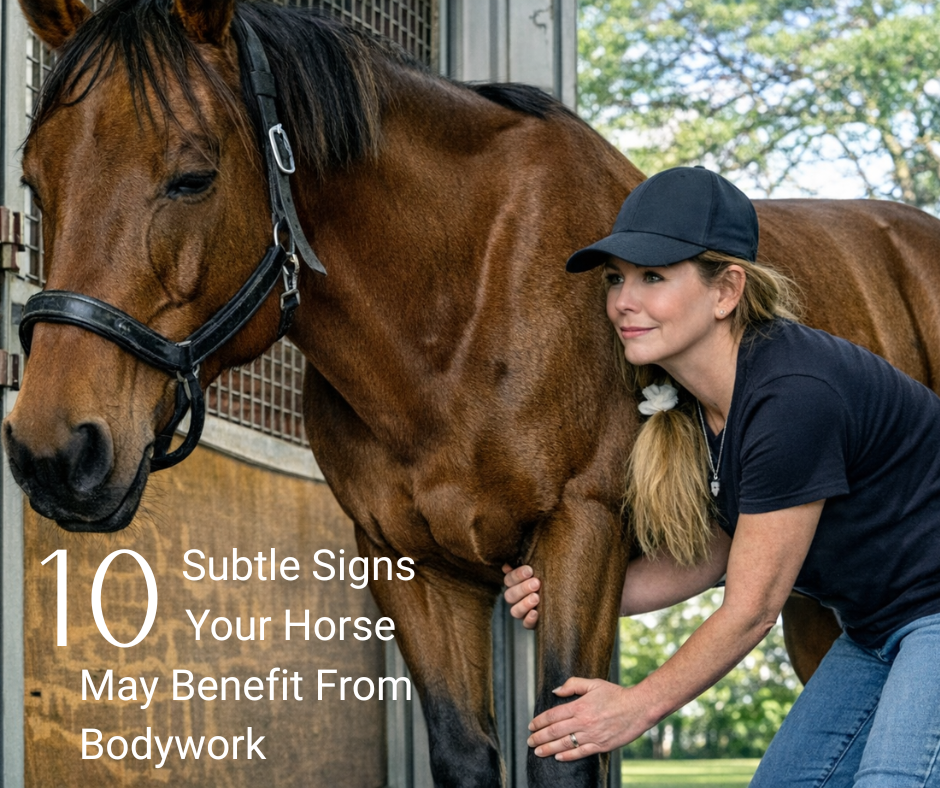
At Equine Hands, the work begins with exactly what the name suggests - hands.
Not because tools are “bad.”
But because a living system requires interpretation and sensitivity - not just stimulation.
Assessment and Treatment Happen Simultaneously
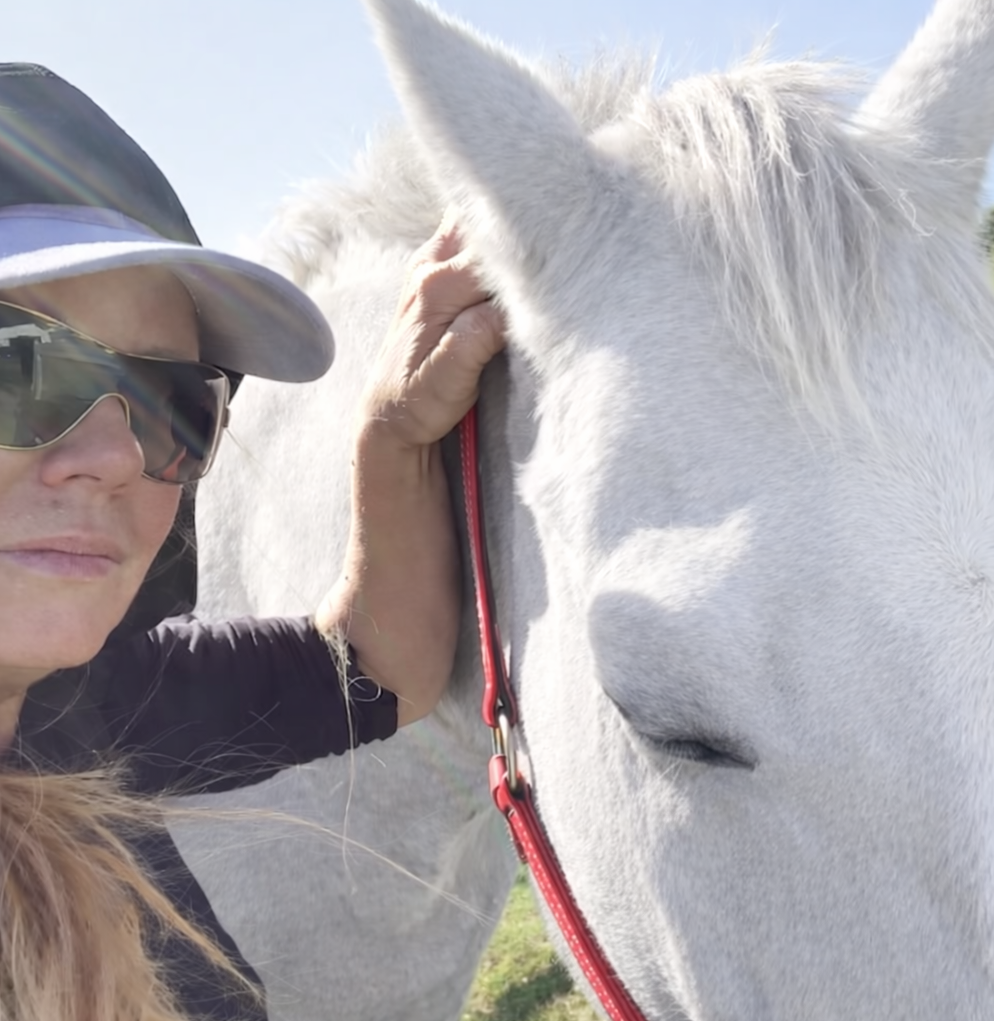
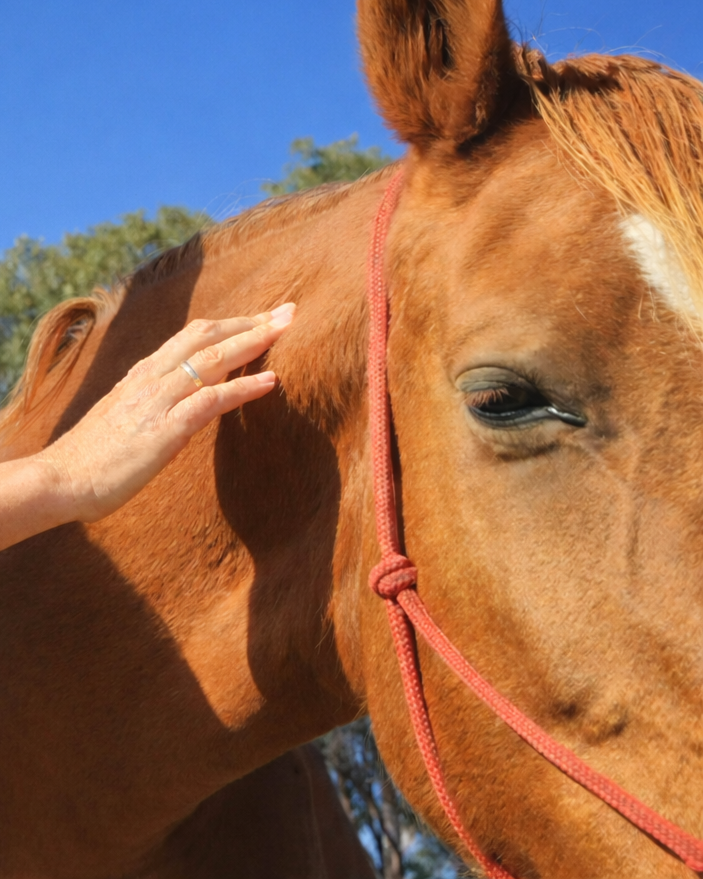
When I place my hands on a horse, I am not simply “massaging.”
I am continuously assessing:
Tissue tone and texture
Temperature differences
Fascial hydration and glide
Subtle guarding or bracing
Changes in posture and weight distribution
Breathing patterns
Facial expression and behavioural shifts
This feedback guides every decision I make.
I am constantly adjusting:
• Pressure
• Technique
• Direction
• Depth
• Duration
Hands do not deliver a preset output.
No two horses present the same way.
No two sessions are ever identical.
Hands listen, respond and adjust to the horse’s body in real time.
The Nervous System Is Listening
Manual therapy works through both physical and neurological pathways.
Skilled, intentional touch influences how the nervous system responds to pressure, movement and sensory input.
When applied appropriately, hands-on therapy can:
Activate mechanoreceptors within skin and connective tissue
Encourage parasympathetic activity
Reduce protective sympathetic guarding
Modulate pain perception
Improve proprioception
The nervous system ultimately determines whether tissue softens or resists.
Hands allow modulation - moment by moment, based on how the horse responds.
Devices cannot respond dynamically to subtle changes in breathing, posture, tone or behavioural feedback. They operate on settings.
The Body Works as a System
From skin to fascia to muscle to nervous system, the body functions as an integrated system. Tension, restriction or compensation in one region can influence a completely different area through the body’s myofascial connections.
You may release tension in the hamstrings and see softening through the poll.
You may address a thoracic restriction and the hind limbs begin to move more freely.
This is not magic. It is system-wide communication.
Research into fascia has highlighted its role not only in force transmission, but also in sensory feedback and movement coordination. Equine studies have also highlighted the continuity of myofascial connections throughout the horse’s body.
The area that feels tight is not always the source of the restriction.
It requires understanding of how regions interact and identifying where the true driver may be.
That requires listening - not just applying pressure.
Tools have a place in sensible management
Red light and near-infrared (NIR) therapy can support cellular energy production, circulation and tissue recovery when appropriately dosed. However, not all devices are created equal. Wavelength, power density, distance and treatment time all influence effectiveness. A pad providing warmth is not automatically delivering therapeutic photobiomodulation.
Kinesio taping can extend the neuromuscular effects of a session by providing ongoing sensory input and postural support for several days.
Used thoughtfully, these modalities complement hands-on therapy.
They are adjuncts - not replacements.
A device applies standardised stimulation to an area.
Hands adapt stimulation to the individual in front of them.
Sensing Over Coverage
Full-body devices generally treat regions or large muscle groups.
Hands feel the tissue - skin, muscle, fascia - and detect subtle changes that guide the work.
Sometimes the most meaningful change occurs in a small, specific area that requires patience, nuance and adjustment.
More stimulation is not always better.
More coverage is not always more effective.
Sensitivity of touch matters.
The Equine Hands Approach
At Equine Hands, bodywork is:
Individual
Sensitive
Responsive
Neurologically guided
System-aware
Just like nutrition, it is never one-size-fits-all.
The hands come first.
Change happens when the body is heard.